Olive oil is a fresh product. It is pressed from fruit, and like other fresh things it changes over time. A bottle that tasted bright and green in the first week can taste flat by the sixth month if it is kept badly. The good news is that keeping it well takes very little effort.
The three enemies
Three things wear down the flavor of olive oil: light, heat and air. Everything else in this post is just a way of keeping them away.
- Light speeds up the chemical reactions that turn fresh oil stale. A clear bottle on a sunny counter is about the fastest way to ruin good oil.
- Heat does the same thing, only more quickly the warmer it gets. Oil left near a stove or above the oven ages much faster than oil in a cool cupboard.
- Air brings oxygen, which slowly turns the oil rancid. Each time you open the bottle, a little more gets in.
Why dark glass
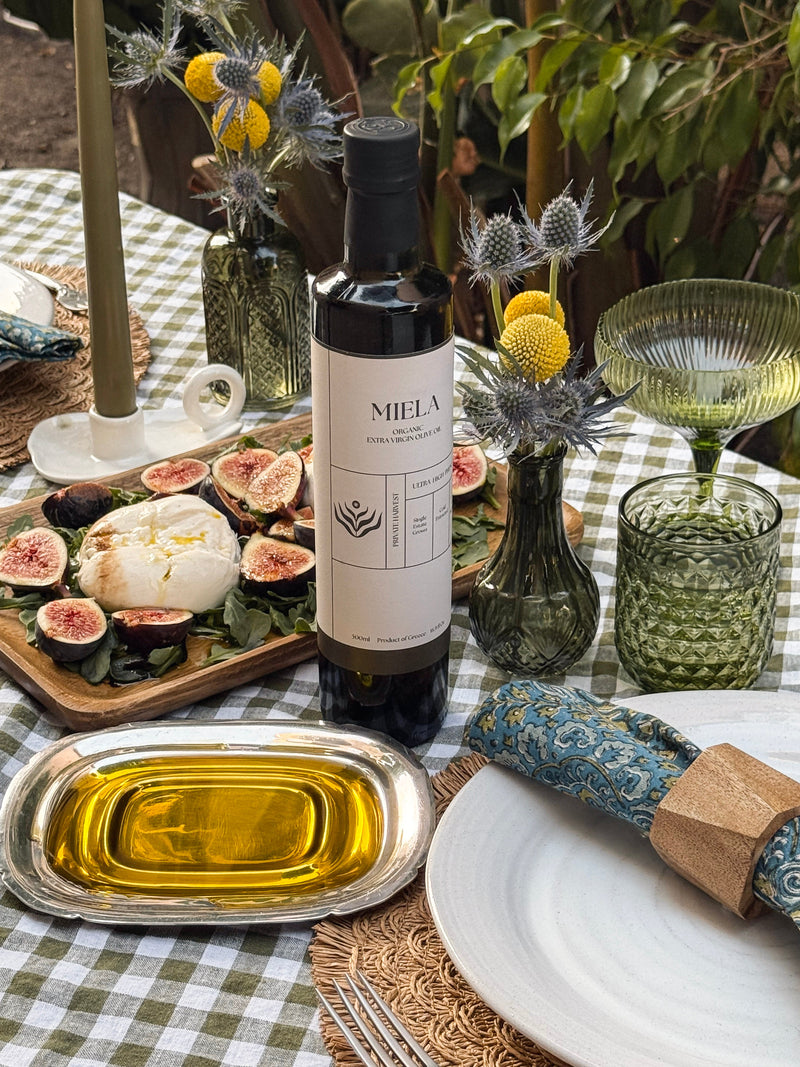
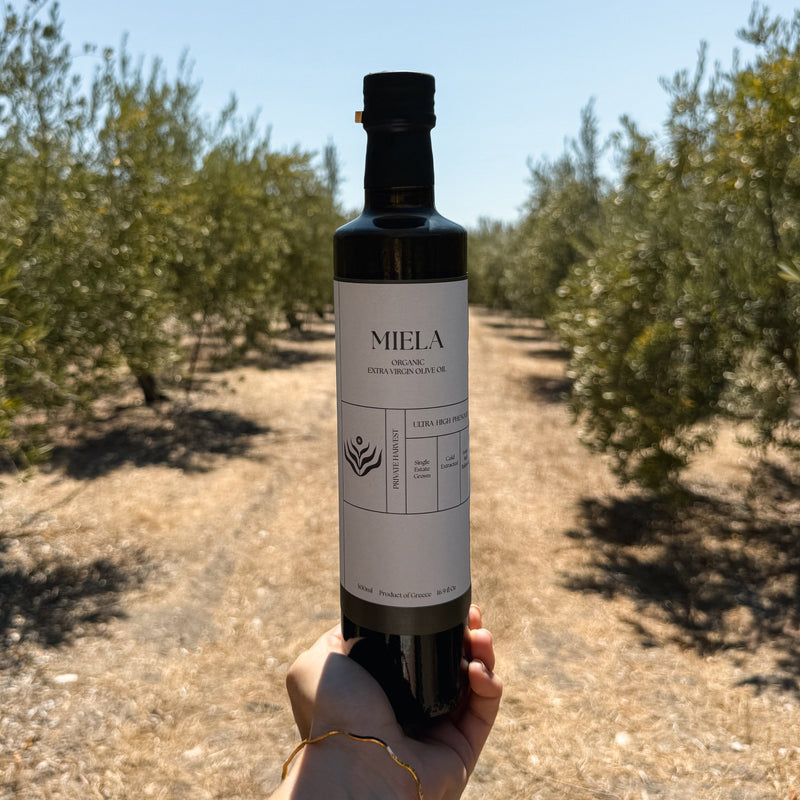
This is the reason our oil comes in a dark glass bottle. Dark glass blocks much of the light that reaches the oil, and glass does not pass any flavors to the oil the way some plastics can. It is a real help, but it is not a substitute for a dark shelf. A dark bottle on a bright, warm windowsill still ages faster than it should.
Where to keep it
The best spot is a cool, dark cupboard that you can reach easily. Reachable matters: oil that is hard to get to does not get used, and oil that sits for months is oil that ages.
The classic mistake is keeping the bottle next to the stove because it is handy while you cook. The heat rises, and the bottle warms up every time you use the burner. A better habit is to keep the bottle in a cupboard a step or two away, and pour a little into a small dish or cruet for cooking.
Keep the cap on
Close the bottle right after you pour. It is a small habit, and it limits the oxygen that reaches the oil. Wipe the neck if it drips, because oil left on the rim can turn rancid and taint the next pour.
Buy a size you will finish
Big tins are good value only if you use them quickly. Once a bottle is open, the clock is running, because every pour adds air. A 500 ml bottle is roughly a month or two for a household that uses a spoonful or two a day, plus some cooking. That is a sensible size for keeping the oil tasting the way it should. Buying a size you will finish is better than saving a little on a large bottle you will still be pouring from next spring.
How long after opening
For the best flavor, use an opened bottle within a few months. The oil does not vanish after that, it simply loses its brightness. The grassy smell fades first, then the pepper. An oil kept well can still be pleasant for longer, but the peak is early.
You do not need the fridge
Some people put olive oil in the refrigerator. It is not needed, and it is a bit of a nuisance. Cold makes olive oil turn cloudy and even solid, as the natural waxes and fats firm up. That is harmless, and it clears once the oil returns to room temperature. But you will have to wait for it every time you want a spoonful. A cool cupboard is enough.
How to tell it has gone off
You do not need a lab. Use your nose and your tongue.
- Smell it. Fresh oil smells of grass, leaves or fruit. Rancid oil smells like crayons, stale nuts or old paint.
- Taste a small amount. Rancid oil tastes flat, greasy and stale, with none of the green intensity or pepper it started with.
- Trust the comparison. If you are unsure, taste it next to a fresh bottle. The difference is usually obvious.
Oil in this state is not pleasant to eat, so if it smells wrong, it is best to let it go and start a fresh bottle. If you want to learn the difference between fresh and tired, our post on how to taste olive oil walks through it.
The short version
- Keep it cool, dark and away from the stove.
- Cap it every time.
- Buy what you will finish.
- Use within a few months of opening.
- Skip the fridge.
Our early harvest oil arrives in a dark 500 ml bottle, sized for a household that uses it daily. You can find it here, and the freshness measures from its lab report are on the science page.